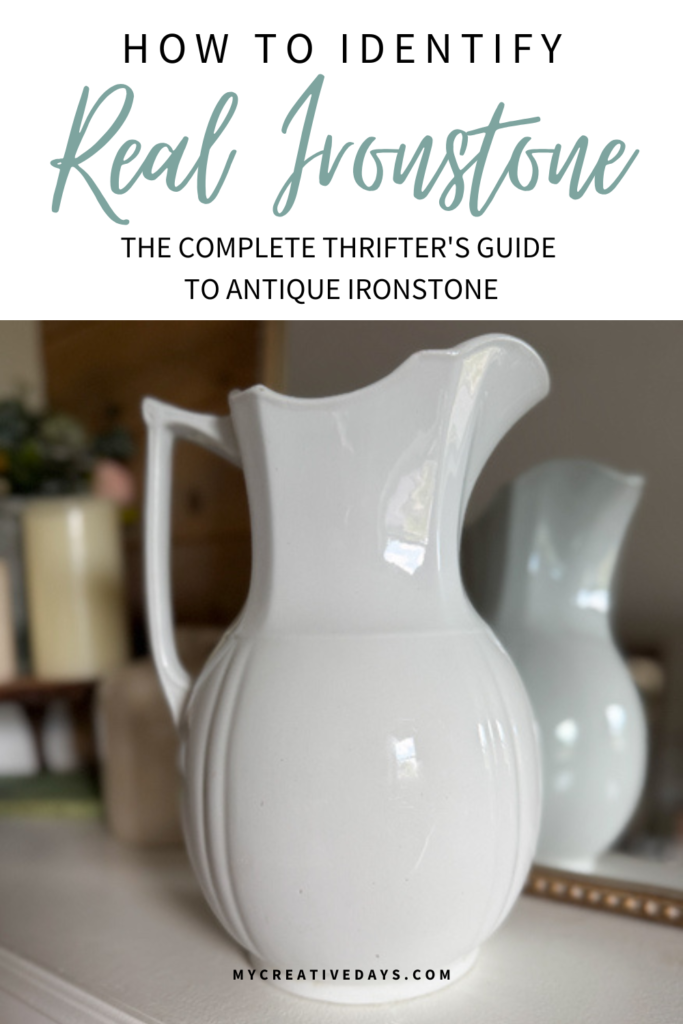

Learning how to identify real ironstone is one of the most valuable skills you can have when you’re thrifting, shopping at yard sales, estate sales, or browsing Facebook Marketplace. It’s also one of the questions I get asked the most.
If you’ve followed My Creative Days for any length of time, you know I can’t resist stopping to look at white dishes, pitchers, platters, and bowls whenever I’m out treasure hunting. Over the years, I’ve brought home some amazing ironstone pieces, and I’ve also learned what separates authentic antique ironstone from newer reproductions.
The good news? You don’t have to be an expert to start spotting real ironstone. Once you know what to look for, you’ll start seeing it everywhere, and you’ll be surprised how often it gets overlooked at thrift stores and yard sales.
In this guide, I’m sharing everything I look for when identifying ironstone, including common maker’s marks, stamps, crazing, weight, color, age, and the types of pieces I always keep an eye out for.
How To Identify Real Ironstone
What Is Ironstone?
Despite its name, ironstone doesn’t contain iron.
Ironstone is a durable ceramic that was first developed in England in the early 1800s as a stronger alternative to porcelain. It quickly became popular because it was sturdy enough for everyday use while still having the elegant look of fine china.
Today, antique ironstone is one of the most collected vintage items because it works beautifully in farmhouse, cottage, traditional, French country, and modern homes.
One of my favorite things about collecting ironstone is that every piece has a story. Whether they sat on someone’s dining table for generations or served meals in an old hotel, these pieces have history, and that makes them even more special.
Why Is Ironstone So Popular?
There are so many reasons collectors love antique ironstone.
- It never goes out of style.
- It mixes beautifully with almost every decorating style.
- It’s durable.
- It’s easy to decorate year-round.
- It looks beautiful displayed on open shelving, hutches, and cabinets.
- It often holds its value well.
Even if you aren’t collecting it as an investment, it’s one of those timeless pieces you’ll probably use and display for years.
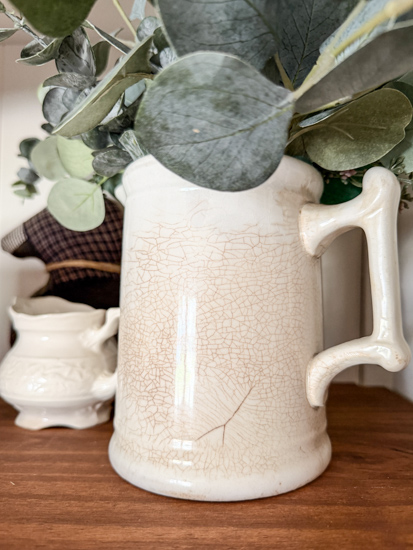
The First Thing I Do If I Think I Found Ironstone: Turn It Over
Whenever I pick up what looks like ironstone, I immediately turn it over. The bottom of the piece often tells you everything you need to know.
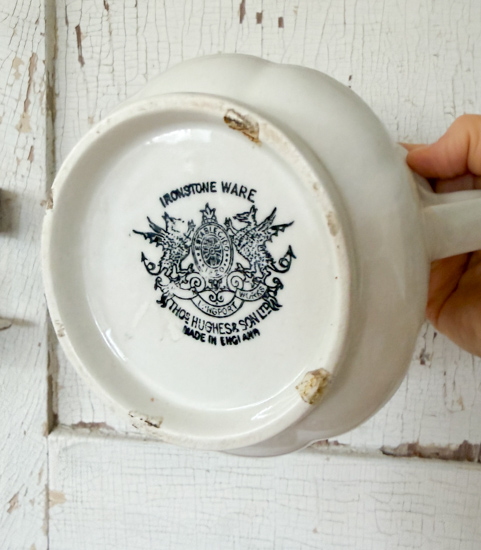
Many authentic pieces have a maker’s mark stamped into the bottom. Sometimes it’s bold and easy to read. Other times, it’s faint after decades of washing and use. Don’t worry if the stamp isn’t perfect. Age often wears these marks down.
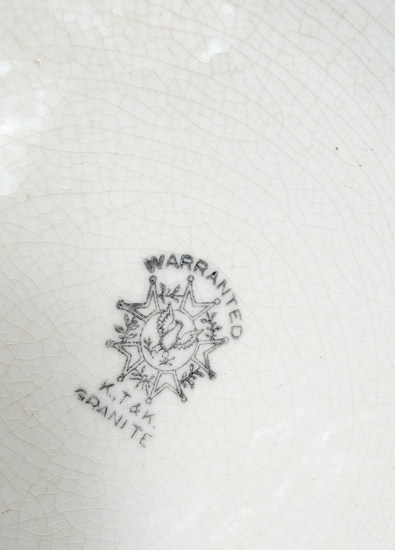
How to Identify Real Ironstone – Common Ironstone Maker’s Marks and Stamps
One of the easiest ways to identify authentic ironstone is by recognizing the names of well-known manufacturers.
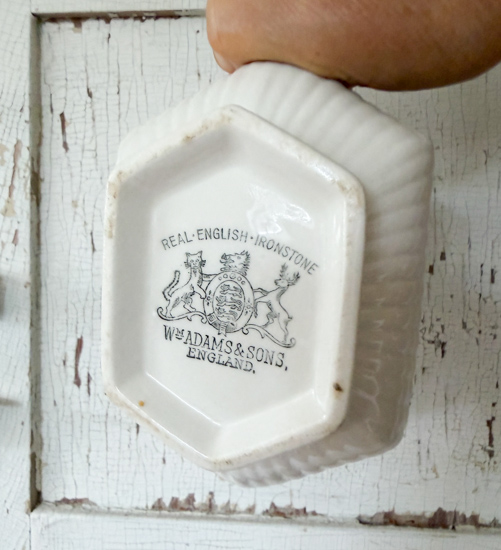
Some of the most common ironstone makers include:
- Mason’s Patent Ironstone China
- Johnson Brothers
- J & G Meakin
- Alfred Meakin
- Wood & Sons
- Ridgway
- Burgess & Leigh
- Royal Ironstone China
- W.H. Grindley
- Wedgwood
- Homer Laughlin
- Buffalo China
- Knowles, Taylor & Knowles
- Churchill
- Adams
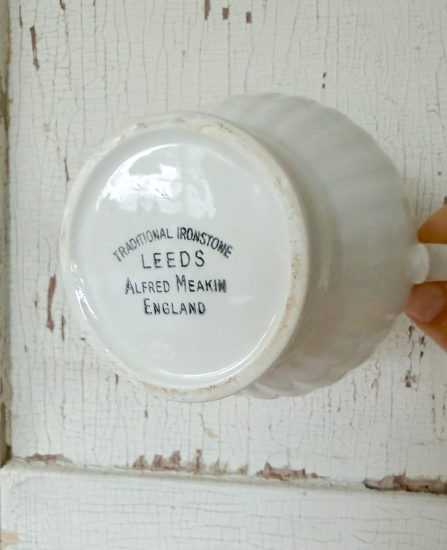
Some stamps include the words “Ironstone China” or “Royal Ironstone China,” while others simply list the manufacturer and country of origin.
What to Look for on the Stamp
When examining the bottom of a piece, check for:
- The manufacturer’s name.
- “England” or “Made in England”.
- “Ironstone China”.
- Registration numbers.
- Patent dates.
- Royal crests or decorative logos.
These details can help narrow down the age of your piece.
Does Every Piece Have a Stamp?
No!
This surprises many people. Some older ironstone pieces were never stamped. Others originally had paper labels that disappeared decades ago. And on well-loved pieces, years of washing may have nearly erased the maker’s mark.
If you don’t find a stamp, don’t automatically assume it isn’t authentic. That’s when the other clues become even more important.
Look for Crazing
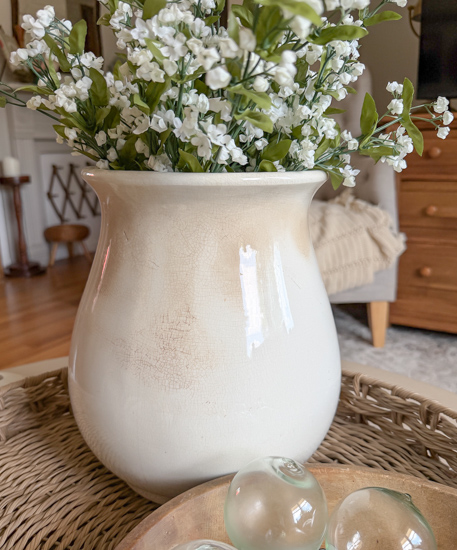
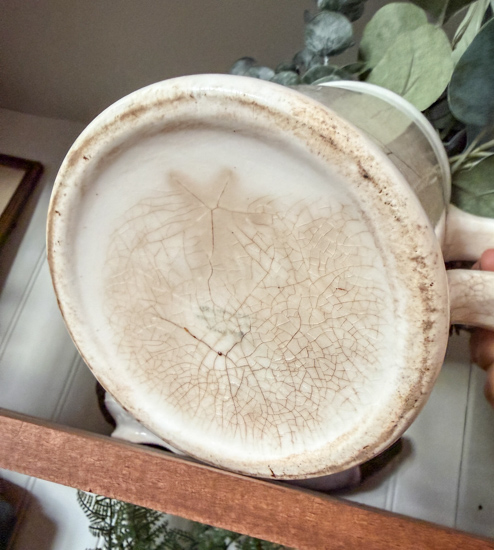
One of the easiest ways to recognize antique ironstone is by looking for crazing.
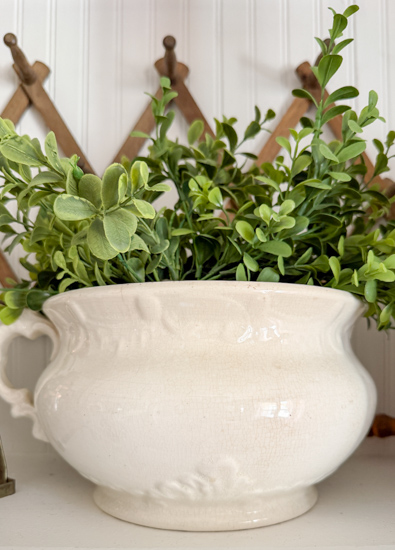
Crazing is a network of tiny hairline cracks in the glaze. These aren’t cracks in the pottery itself; they’re simply part of the glaze that naturally develops over decades as the piece expands and contracts. Light crazing is completely normal. In fact, many collectors prefer it because it shows age and authenticity.
Heavy staining inside the crazing can affect value, but for decorating, I still happily buy those pieces if I love them.
Feel the Weight
Authentic antique ironstone almost always feels heavier than modern dishes. Older manufacturers made thicker, sturdier pieces. Whenever you’re unsure, compare it to a modern dinner plate nearby. The difference is usually noticeable.
Pay Attention to the Color
Most antique ironstone isn’t bright white.
Instead, you’ll often notice:
- Creamy white
- Warm ivory
- Slight yellow undertones
- Soft aging
- Natural patina
That warmer color is often a sign you’re looking at an older piece.
Check the Edges
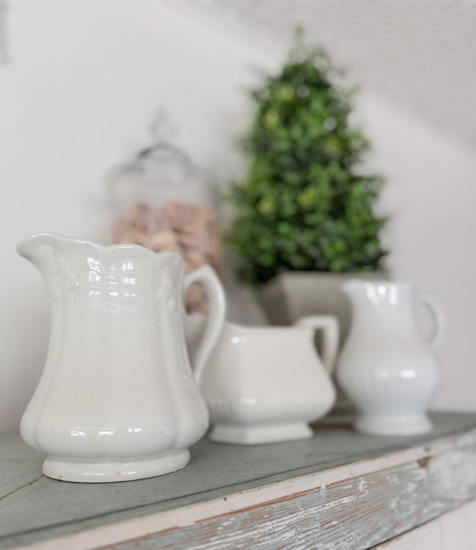
Years of everyday use leave clues. Look closely at: handles, rims, bases, foot rings. You’ll often notice gentle wear that newer reproductions don’t have.
Types of Ironstone Pieces to Look For
One of the reasons I love collecting ironstone is that there are so many different pieces to find.
Whenever I’m thrifting, these are the items I always check for:
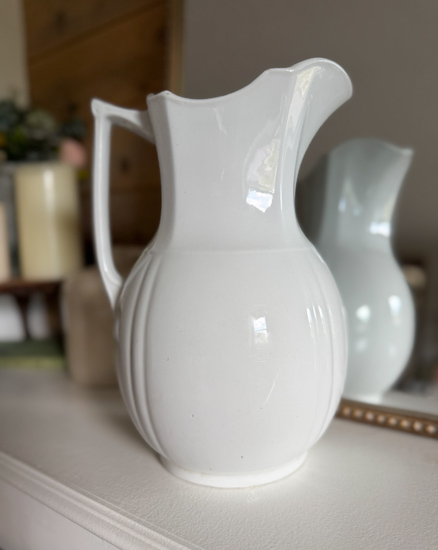
- Pitchers
- Platters
- Soup tureens
- Covered vegetable dishes
- Mixing bowls
- Wash basins
- Chamber pots
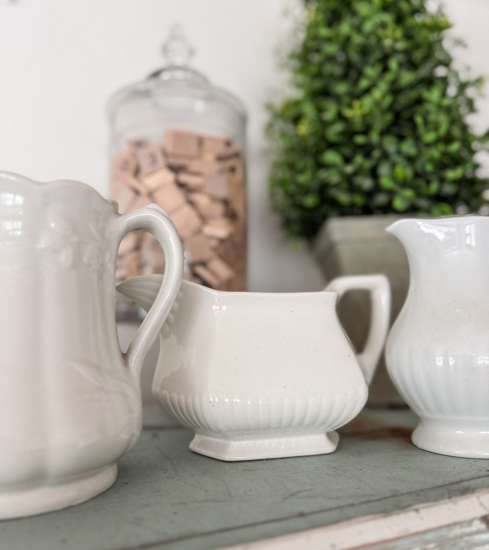
- Creamers
- Sugar bowls
- Teapots
- Butter pats
- Gravy boats
- Serving bowls
- Cake stands
- Hotel ware
- Restaurant ware
- Hotel pitchers
- Soap dishes
Larger serving pieces are often my favorites because they make such beautiful decorating pieces.
Should You Buy Pieces with Chips?
This depends on why you’re buying them. If you’re collecting for resale, condition matters. If you’re decorating your home, small chips usually don’t bother me. Large cracks that go completely through the piece are different. Those typically lower both value and durability.
Can Ironstone Be Worth Money?
Absolutely. Not every piece is valuable, but certain pieces can sell for hundreds of dollars.
Value depends on:
- Age
- Maker
- Rarity
- Size
- Shape
- Condition
- Collector demand
Just because a piece isn’t rare doesn’t mean it isn’t worth bringing home. Many inexpensive pieces become favorites simply because they’re beautiful and full of character and charm.
My Favorite Ironstone Thrifting Tip
If you find a piece that checks most of the boxes and is priced reasonably, buy it. You can always research the maker once you get home.
I’ve found some of my favorite pieces because I trusted my instincts instead of overthinking the purchase. The more ironstone you handle, the easier it becomes to recognize.
Eventually, you’ll be able to spot it from halfway down the aisle or amongst a pile of planters at a yard sale that I recently scored. I shared more of my Ironstone collection and what to look for on my YouTube channel HERE. Make sure to SUBSCRIBE when you are there. I am sharing new videos every week!
Frequently Asked Questions About Ironstone
Does all ironstone have a stamp?
No. Many older pieces have worn or missing marks.
Is crazing a bad thing?
Not at all. Light crazing is expected on antique ironstone and often adds character.
Is all ironstone white?
Most antique ironstone is white or cream, but you’ll also find transferware patterns, flow blue designs, and decorative embossed pieces.
Can antique ironstone go in the dishwasher?
I recommend handwashing antique ironstone to preserve the glaze and prevent further wear.
Is chipped ironstone worth buying?
Yes! Minor chips and flea bites are common and don’t stop many collectors from bringing home beautiful pieces.
Learning how to identify real ironstone gets easier every time you go thrifting. Start by checking for a maker’s mark, then pay attention to the weight, color, crazing, and overall wear. Before long, you’ll start recognizing authentic pieces that many other shoppers pass right by.
One of my favorite things about thrifting is finding beautiful pieces with a history, and ironstone is at the top of that list. Whether you’re just starting your collection or you’ve been hunting for years, I hope these tips on how to identify real ironstone give you the confidence to spot hidden gems on your next treasure hunt.
PIN THIS POST!